A few years ago, what I thought at the time was an insignificant discussion with an HR friend, led me to ask myself fundamental questions about how I viewed coaching. Was coaching inevitably a matter of "cuddle therapy", a palliative solution that was ultimately derisory in view of the difficulties experienced in the company, or was it possible to completely re-consider the approach and representation of this profession?
In a context of accelerated changes in companies, I have long considered that coaching could be an excellent tool to enable human resources professionals to overcome the inability of organisations to support managers and leaders in the difficulties they encounter on a daily basis. In any case, that was the idea I had of it until that disconcerting conversation, in the summer of 2008 at the water's edge, with Jérôme, an HR friend who has always had the wisdom to never assign me a mission…
While we were finishing talking about the new job he was starting when he got back from holiday, we witnessed an astonishing phenomenon: the sun was setting on the horizon while the moon was rising behind us. At the center of this pendulum, our conversation began to change: my depiction of coaching was about to take a hit!
A friendly conversation
- So, Arnaud, the coaching? How is it going?
Faced with such a vague question, I am always puzzled. I was not going to tell him that everything was fine,
that clients were pouring in and that I was waiting for the end of the year to buy myself a convertible red
Ferrari!
- It's okay... I've had some great team coaching sessions recently. But you know, the year is never won when
you are self employed!
- Stop! I know very well that you all live at the whim of companies like psychoanalysts do on psychic
misery!
- What do you mean?
- Coaching? It's the crack of the average manager... You see, if coaching is developing so much, it's
because organisations are incapable of managing the suffering that they generate. So they buy a cream to rub
onto their bumps and bruises.
- Bumps and bruises?! All managers are not bumps and bruises!
- Nope! Bandages for wounds!
My annoyance starting to show, I answered back a little sharply:
- It's better than nothing! Since you are not able to make your employees happy at work…
- Hey, easy! You are still a quality bandage! At the price you are paid! But that doesn't mean we expect
"cuddle therapy" from you!
- What? Cuddle therapy?
- Yes, personal development to keep it simple! You know, it's very good that you help people to blossom, to
find their feet, to gain self-esteem... But frankly, it's not up to the company to pay for it. Companies
needs are that relational problems are resolved to allow employees to give themselves fully to their job!
Coaching in an armchair has got to stop!
- In an armchair?!... Well, assuming that we do do “cuddle therapy”, you tend to encourage us to do it that
way! And this in the name of kindness, psychosocial risks and a generally a keep it hidden approach!
- OK, OK... I think we can agree that both parties are responsible! But there is nothing we can do about it.
The law is the law!
- The law can take the blame for it!
- And then we often find ourselves caught up in paradoxical injunctions such as: “Innovate and control
everything” or “Accompany change and maintain social order”.
- So what should we do about it?
- I do not know! I’m changing jobs!
From perplexity to complexity
For a while, I wondered if our conversation hadn't just turned into the excitement of two old friends who
had overindulged in a bit of summer rosé... But I continued to feel perplexed. Even if I knew that what my
friend was saying was not the opinion of every HR Director on earth, I felt that his words had brought to
light an intuition I had already felt.
Six months later, with Caroline, one of my clients, I fell into the systemic paradigm through the analytical
finesse of a Malarewicz. A world opened up to me: Morin, Rosnay, the world of Palo Alto with Bateson,
Watzlawicz, Weakland, Fisch and finally Wittezaele and his band from the Gregory Bateson Institute, not to
mention the power of a Nardone. But what captivated me the most in this new world were the technical
gestures that I learned from giants like Erickson, Don Jackson and many others less known and more
contemporary. I discovered that coaching was the art of leading others to change their representation of the
world through an iterative strategic process that used the client's competence to fail. In fact, I was
learning aikido without knowing it.
A new representation of the coaching profession
I became passionate about this different approach that many of my fellow coaches were weary of because it
goes against the well-established ideas of coaching. Don't tell anyone, but let me share with you two
specificities of the systemic approach that seem fundamental to me.
Instead of labelling people through personality indicators, the coach will focus on the relationship that
their client has with their environment. Indeed, the systemic approach considers that it is not the people
who are dysfunctional but the relationships induced by a given context. This point is important, because it
is what makes it possible to promote change. It is the relationship that the person can take responsibility
for and, consequently, regain room to move. The systemic approach is an ethic of responsibility.
Instead of basing its effectiveness on understanding through the explanation of tools or the knowledge of
human theories, the systemic approach advocates the need to bring to life an emotional experience that can
correct the client’s dissonant depiction of the external environment they are in. Put more simply, if a
manager does not delegate, it is not the awareness of their lack of trust in their collaborators that will
help them change their behaviour, but it is the emotional experience that they encounter of their lack of
trust in me in a session, or in others in their environment. The systemic approach is an experiential
problem-solving technique.
So what?
So, I said to myself that there was not one coaching profession but different coaching professions. To
enable my clients to overcome the challenge they are facing, to solve their problem, to acquire relational
flexibility in their professional environment, I had to innovate: responsiveness as soon as the problem
appeared, short intervention times, a proven and efficient work method…
And so Everswing became the answer to meet the needs like those of my HR friend Jérôme and all those for
whom our conversation resonates! Everswing comes to reinvent our professions, explore new creative
solutions, dissolve problems and contribute to positive transformations for people and organisations. A vast
ambition! But it is with humility that we give our enthusiasm to support your companies!
@Jérôme: above all, please don’t call on me to help you at work, let's keep our friendship for setting the world to rights down by the water over a glass of wine!
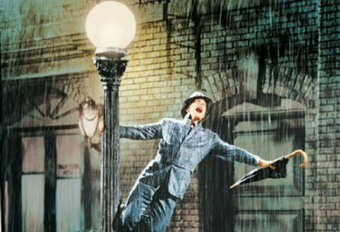
Image: Singing in the Rain - Stanley Donen, Gene Kelly